
Imagine baking a cake for a party. You mix up the batter, put it in the oven and take a bite when it is done. It tastes terrible! You realize you accidentally put in salt instead of sugar, forgot the baking powder and left out the eggs. Now imagine a friend looks at the cake and says, “The only problem here is that the pink icing on top looks a bit messy.” You would feel confused! The icing on top is just a tiny detail. The real problem is a mistake deep inside the cake batter.
For a very long time, millions of women around the world were treated just like that broken cake. When they went to the doctor because they were always tired, gaining weight, having bad pimples or growing hair on their faces, the doctors looked at only one body part: their ovaries. Doctors told them they had Polycystic Ovary Syndrome (PCOS), a big name that blamed everything on tiny fluid sacs called “cysts” in their ovaries. They were looking only at the icing, not the batter!
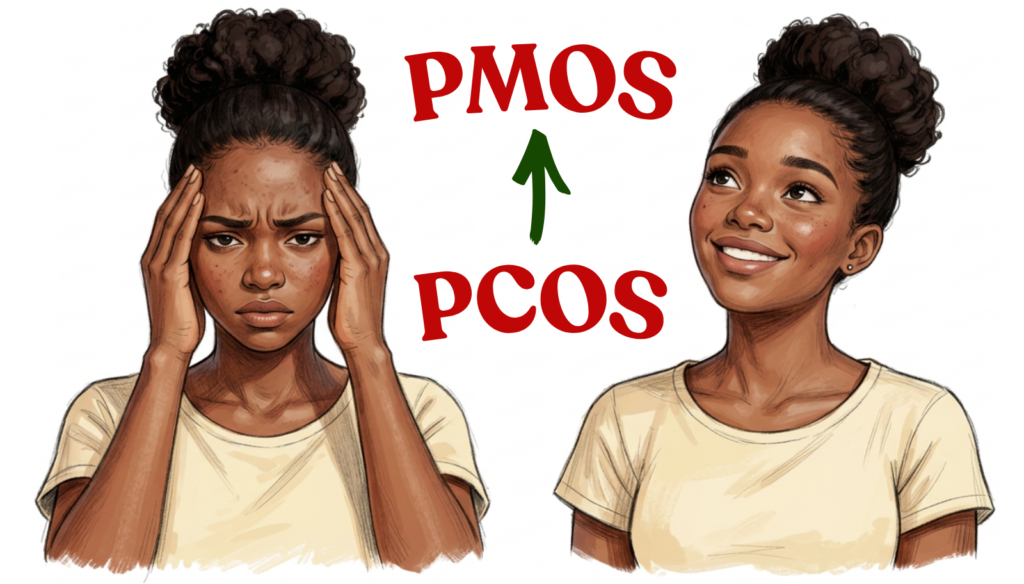
But now, a huge team of doctors and scientists from all over the earth have officially changed the name. In an important global report published in the world’s top medical journal The Lancet, they renamed the condition Polyendocrine Metabolic Ovarian Syndrome (PMOS).
The PCOS to PMOS change and its implication for Menstrual health and Wellness is a massive win for women and girls. It stops blaming the ovaries and finally explains what is happening to a woman’s whole body.
Let’s look at what this new name means using simple words.
The Big Mistake Behind the Old Name: There Are No Cysts!
The old name, Polycystic Ovary Syndrome scared a lot of women. When people hear the word “cyst,” they think of a painful blister that needs a doctor to cut it out with a knife. But inside the body of a woman with this condition, there are absolutely no dangerous cysts!
What is actually inside her ovaries are hundreds of completely natural, tiny, half-grown eggs. In a normal month, a woman’s body grows a few tiny eggs, and one big egg pops out. But because of a chemical confusion in her blood, these tiny eggs get stuck halfway through growing. They cannot pop out. They just sit there quietly side-by-side, looking like a tiny string of pearls on a doctor’s computer screen.
Because the old name focused only on the ovaries, it caused a lot of mistakes. The World Health Organization (WHO) reports that 70 out of every 100 women who have this condition are completely missed by doctors or given the wrong answers. Many women have clear ovaries on a doctor’s scan but are still extremely tired or gaining weight. Because their ovaries looked fine, doctors ignored their cries for help for years.
Breaking Down PMOS: What the New Name Means in Easy Words
The new name, Polyendocrine Metabolic Ovarian Syndrome (PMOS), is like a map that explains the whole body.
Let’s break it down:
Poly-Endocrine (The Chemical Messengers): “Poly” means many, and “endocrine” is your body’s hidden system of chemical messengers called hormones. This part of the name proves that the condition is a big hormone imbalance across the whole body, not just a small ovary problem. When these messengers get confused, they make too much male hormone (testosterone). This is what causes painful pimples on a woman’s jaw, hair thinning on her head or extra hair growing on her face or stomach.
Metabolic (The Engine Room): This is the most important new word. Your metabolism is your body’s internal engine room that turns food into energy. PMOS is driven by something called insulin resistance. When you eat food, your body turns it into sugar. A hormone called insulin acts like a key to unlock your body’s cells so the sugar can go inside and give you energy. In a woman with PMOS, the cell locks are jammed! The body has to make way too many keys (insulin) to force the locks open. This flood of extra insulin tells the ovaries to make too much testosterone, which stops the eggs from growing and causes intense, non-stop sugar cravings.
Ovarian (The Target): Notice that the word “Ovarian” is now moved down the line. The new name shows that the ovaries are not the bad guy causing the problem. They are just a target catching the stress from the broken hormone messengers and engine room up above.
Syndrome (Different Symptoms for Different People): A syndrome means a mix of different signs. PMOS does not look exactly the same in every woman. One girl might miss her periods and gain weight easily, while another girl might have regular periods but struggle with severe hair loss, anxiety or bad sleep.
What This Means for Periods and Cycle Tracking
The PCOS to PMOS change and its implication for Menstrual health and Wellness changes how we look at irregular periods. For a long time, if a girl or woman missed her periods, doctors just gave her a medical pill to force her body to bleed.
The new rules state that a woman’s period is like a scoreboard showing how healthy her inner engine room is. When you miss periods or your cycle takes too long to arrive, your body is sending an emergency alarm. It means your cellular engine room is under too much stress from insulin and sugar.
Tracking your cycle now means tracking your whole life, not just counting days on a calendar. True period literacy means watching your energy drops after meals, tracking your sleep, and writing down your sugar cravings, because these daily engine habits decide if your ovaries can successfully grow an egg each month.
What This Means for Long-Term Health and Care
By changing the name, doctors will stop waiting until a woman is old enough to want a baby before they help her. A top medical report from the American Society for Reproductive Medicine (ASRM) explains that treating PMOS early protects women from bigger health problems later in life.
When a woman’s insulin and hormones stay broken for years, it increases her risk of getting diabetes or heart problems when she grows up. Also, the ASRM reports that these hormone shifts double a woman’s risk for high anxiety and sadness. Furthermore, a global study by The World Bank shows that when countries teach girls about conditions like PMOS early, it saves millions of dollars in hospital costs and helps women stay strong, educated and productive.
3 Simple Ways to Help Your Body Balance Its Hormones
Healing takes time, but you have the power to fix your jammed cell locks and balance your hormones naturally through simple, healthy daily habits that includes:
Eat Lots of Fiber and Real Food: Protect your engine room by eating foods with lots of natural fiber, clean proteins, and healthy fats (like avocados, green vegetables, and whole grains). This keeps your blood sugar steady and stops your ovaries from making too much testosterone. Send us an email (via menstrualdemy@gmail.com) for a more personalized meal plan to help you on your journey.
Do Easy Muscle Exercises: Doing simple strength exercises or lifting light weights builds muscles. Muscle acts like a big kitchen sponge that sucks extra sugar out of your blood, which helps your insulin keys work smoothly.
Switch to Reusable Pads: Protect your hormone system from bad chemicals in the environment and the use of disposable pads made from plastics. Choose premium, breathable reusable pads made from clean cotton or bamboo over cheap disposable pads that carry hidden plastic materials or chemical perfumes. Explore other sustainable alternatives that contribute to empowering you to having your period more sustainably.
Subscribe to our official brand newsletter to receive relevant updates, menstrual wellness roadmaps, and early invites to our upcoming wellness programs.
Medical Disclaimer: This content is written only to teach you about your body and must never replace real advice from a doctor. Always talk to a licensed healthcare provider or endocrinologist if you have irregular periods or hormone imbalances.