
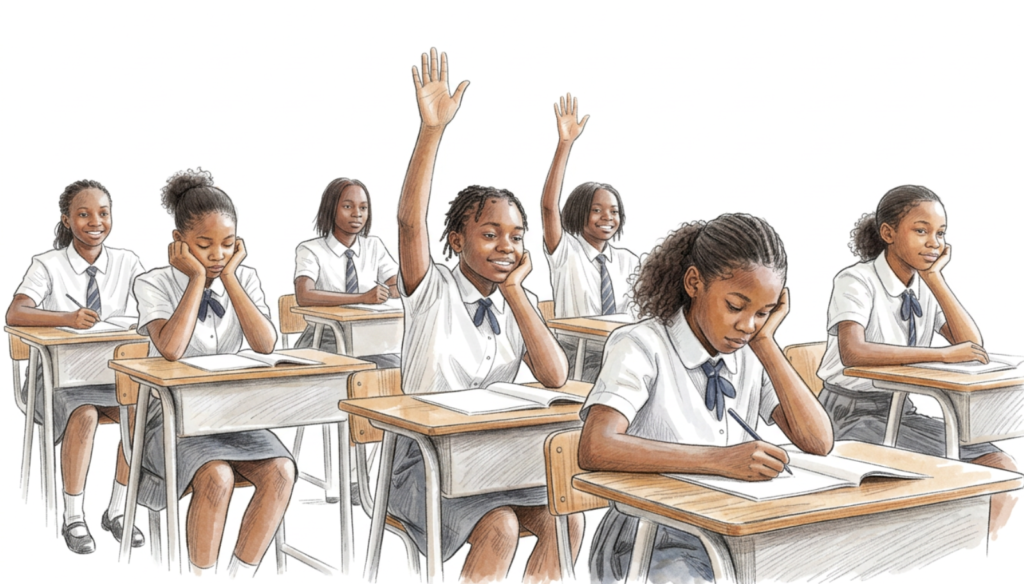
When we evaluate why young girls drop out of school or lag behind their male peers in academic performance, we typically point to factors like child labor, structural poverty or early marriage. However, global tracking data has unmasked a massive, hidden biological and social barrier that directly sabotages a girl’s learning environment from the moment she reaches puberty: poor menstrual health management (MHM).
For primary and secondary school girls, the onset of their cycle represents a severe educational disruption. A total lack of clean sanitation facilities, combined with extreme price inflation on personal care items and intense peer bullying, forces girls into monthly academic isolation. To understand how menstrual barriers compromise gender equity in the classroom, we must analyze empirical impact data across local, regional and international educational sectors.
The Nigerian Context: Inflation, Absenteeism and Policy Steps
In Nigeria, the intersection of inflation and poor school infrastructure creates an environment where young girls are systematically penalized for a natural biological function.
The School Disruption Metric: A localized, multi-school cross-sectional study published in the Springer Journal of Reproductive Health investigated the relationship between MHM and educational disruption among adolescent girls in secondary schools in Ekwulobia, Anambra State. The data proved that poor sanitation facilities and severe cramp pain directly trigger a pattern of recurring school absenteeism, drastically lowering in-class participation and stalling overall academic performance among teenage girls.
The Classroom Reality in Kwara State: Parallel data tracking from the Al-Hikmah University Journal of Health Sciences (AJOHS) evaluated in-school adolescent girls in Ilorin West, Kwara State. The findings revealed that missing water, sanitation, and hygiene (WinS) infrastructure inside school toilets directly induces fear of public staining and social isolation. This environment forces young girls to miss multiple test and exam days simply because they cannot manage their cycle safely or with dignity while away from home.
The Menstrual Inflation Footprint: This educational gap has been dramatically worsened by extreme consumer price shifts. According to extensive market data compiled by Dataphyte Nigeria, the retail price of standard disposable sanitary pads in Nigeria skyrocketed by over 150%, reaching roughly ₦1,500 per pack. Dataphyte’s economic tracking reveals that a Nigerian woman or young student’s family must spend between 5.1% and 15.46% of the country’s baseline annual minimum wage strictly on single-use pads. This economic crisis forces young school girls to resort to dangerous, unhygienic alternatives like unwashed rags, cotton wool or foolscap paper sheets, increasing their risk of severe reproductive infections and driving up school drop-out rates.
The National Policy Response: To combat this educational crisis, the Federal Ministry of Women Affairs validated the historic National Policy on Menstrual Health and Hygiene Management (MHHM) in Nigeria. This legislative blueprint is specifically engineered to restructure school environments so that no girl ever misses a classroom day, exam or social opportunity due to her cycle.
However, validating an institutional blueprint is only the first step in a much larger struggle. The true measure of reproductive equity lies in aggressive local adoption and real-world implementation. Far too often, historic legislative documents remain trapped as passive paperwork on administrative desks while everyday public schools continue to operate without running water, private waste disposal systems, or emergency pad supplies. To prevent this policy from becoming a symbolic gesture, state ministries, local government authorities, and school boards must actively translate these mandates into funded school budgets and localized evaluation metrics.
True implementation requires shifting from high-level government declarations to active, community-led execution. This means localizing the national policy by training school administrators, equipping local teachers to deliver unfiltered body literacy, and establishing sustainable production networks for eco-friendly reusable pads within local government areas. By bridging the gap between national legislation and grassroots classrooms, we can transform legal mandates into physical safety nets. This ensures that every schoolgirl feels structurally supported, protected and entirely free to learn during her cycle.
The African Context: Broken Infrastructure and Fragmented Literacy
Across Sub-Saharan Africa, the educational gap between boys and girls widens drastically during early adolescence due to fragmented menstrual literacy and broken school infrastructure.
The Systemic Review Evidence: A comprehensive systematic review tracking adolescent girls (ages 10-19) across Sub-Saharan Africa published via PubMed Central (PMC) explored the direct link between unmet menstrual needs and negative educational outcomes. The data proved that a lack of pre-menarcheal training and institutional support directly spikes adolescent anxiety, leading to a measurable decline in cognitive learning retention and higher long-term school dropout metrics across the region.
The West and Central African Infrastructure Deficit: A rigorous multi-country field investigation published by the UNICEF West and Central Africa Regional Office (WCARO) mapped out case studies across Benin, Niger, and Senegal. The qualitative and quantitative results demonstrated that schools lacking structured MHM education frameworks suffer from deeply rooted, stigmatizing social norms. Male students and untrained teachers frequently mock menstruating girls, creating an environment of intense shame and bullying that paralyzes a young girl’s willingness to speak up, answer questions, or engage in STEM classrooms.
The Academic Performance Footprint: Concentration Loss and Classroom Withdrawal
To fully measure how menstrual barriers limit young girls, we must look past simple attendance tracking and analyze the hidden cost of cognitive withdrawal. Quantitative impact data published in PLOS ONE shows that even when a girl forces herself to sit in a classroom while bleeding, her learning retention drops significantly.
A staggering 97% of adolescent schoolgirls report intense anxiety regarding accidental staining or uniform leakage, forcing them to maintain a rigid, seated position and completely opt-out of active classroom participation. This continuous psychological panic, combined with unmanaged physical pain, creates a deep learning deficit.
The resulting stress leads directly to lower test scores and a severe drop in academic confidence, proving that a lack of structured period care actively sabotages a girl’s cognitive development even when she is physically present in school.
The Global Context: Psychological Stress and Cognitive Decline
Period inequality and its devastating impact on gendered learning outcomes is a pressing international crisis that impacts developed and developing nations alike.
The Psychological Learning Burden: An institutional technical brief published by the United Nations Population Fund (UNFPA) East and Southern Africa Regional Office (ESARO) highlights that impediments to proper menstrual care do not just cause physical discomfort, they induce severe internalized shame, chronic stress and cognitive text anxiety. Fear of accidental leaking onto school uniforms prevents girls from standing up to write on boards or interacting naturally with peers, altering their educational performance long-term.
The Global Call for Curricular Integration: To dismantle this global crisis, the UNFPA Core Guidance Framework demands that countries move past simple product giveaways and transition toward comprehensive, adapted sexuality and puberty education inside the standard school curriculum. Training boys and girls together normalizes the biological process, eliminates institutional bullying, and protects a girl’s cognitive focus so she can complete her basic education with total peace of mind.
The Structural Ripple Effect: Protecting Economic Potential and Mental Well-being
To truly understand why curricular integration is so critical, we must look past the immediate classroom environment and analyze its lifelong economic and psychological impact. When schools isolate reproductive health education or skip it entirely, they inadvertently signal to young girls that their bodies are a source of hidden shame.
According to data tracking from the Guttmacher Institute, providing comprehensive, gender-inclusive puberty education inside standard school curriculums acts as a powerful structural shield. It directly lowers teenage anxiety, delays early sexual debut, and protects a girl’s long-term mental health.
When young boys are trained alongside their female peers, it rewrites the social script of an entire generation, replacing classroom mocking with collaborative empathy. By normalizing menstrual health early in life, we aren’t just improving test scores; we are actively protecting a girl’s self-esteem and ensuring she grows up with the confidence required to enter higher education, secure high-paying corporate roles and take her rightful place in the modern economy.
True education equity is not achieved when we merely build school walls or purchase textbooks. It is achieved the exact moment we dismantle the silent biological barriers that force a young girl to choose between her personal dignity and her classroom seat. When we protect a girl’s menstrual health, we aren’t just distributing products, we are actively defending her right to stay focused, stay educated and lead the future.
The Menstrualdemy Field Evidence: Realities from the MLD4S Initiative in Abuja
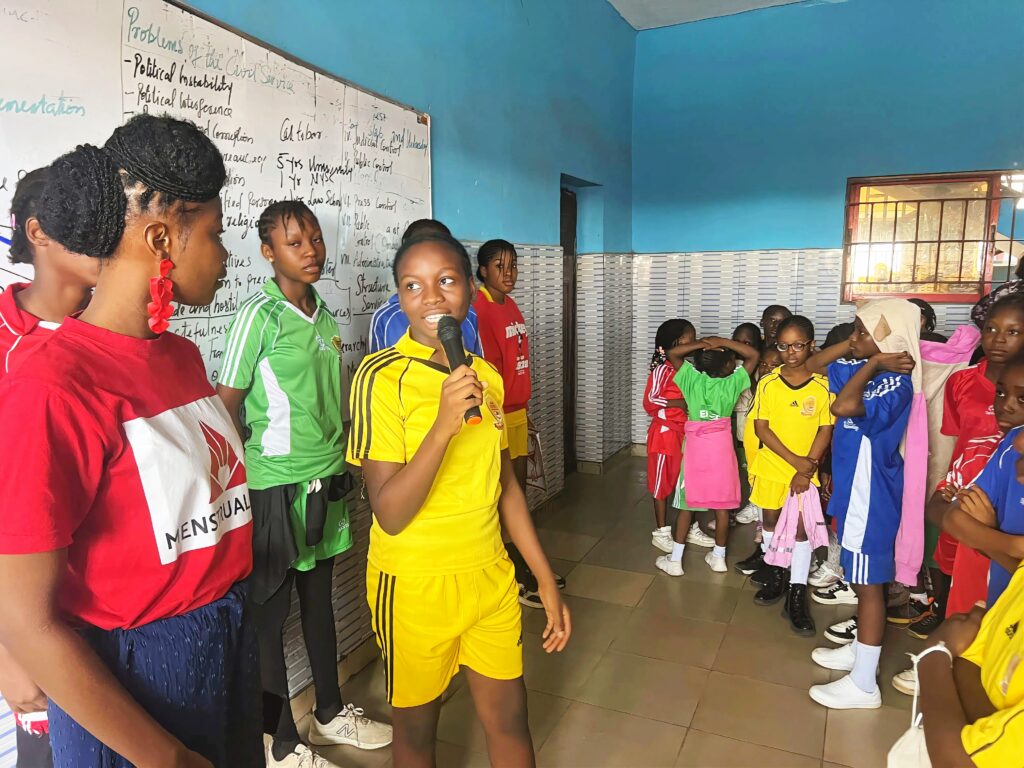
While global statistics provide a high-level overview, our localized field operations reveal the startling depth of this literacy gap right within our immediate communities. As a critical lead-up to the global May 2026 commemoration of Menstrual Hygiene Day, the Menstrualdemy team conducted an intensive educational advocacy outreach under our flagship Menstrual Literacy Drive 4 Schools (MLD4S) Initiative at a private school within the Jikwoyi community in Abuja, Nigeria.
Working directly with a cohort of over 80 young schoolgirls, our real-time observations during this high-profile campaign unmasked a profound crisis of silent body ignorance. Out of the entire room of over 80 students, not a single girl truly understood the basic biological concept of the menstrual cycle. Shockingly, this total lack of comprehension included the older adolescent girls who were already actively menstruating every month.
Furthermore, our interactive assessment revealed another critical gap in early adolescent health management: none of the girls had any clue that their daily nutrition directly dictates their physical comfort during their cycles. For the substantial number of students in the room who reported experiencing severe, debilitating period pain (dysmenorrhea) every month, the concept that dietary habits and inflammatory foods could actively trigger or worsen their cramps was completely new information.
This direct field evidence from Jikwoyi proves that simply handing out physical sanitary pads is a shallow solution. Without an active, structured framework to deliver comprehensive menstrual literacy and functional nutrition education directly into classrooms, young girls will continue to navigate their cycles in a state of intense confusion, pain and academic vulnerability.
Co-Creating Supportive Classrooms with Menstrualdemy
The data is clear: health, personal dignity, and academic literacy are completely inseparable. We cannot claim to support gender equality in education while leaving young girls to manage a complex biological transition using dangerous, makeshift absorbents inside broken school toilets. True educational reform requires replacing outdated cultural silence with rigorous institutional training, structural school infrastructure investments and accessible sustainable menstrual product distribution systems.
Join the Menstrualdemy Movement for Inclusive Education: Are you a school administrator, NGO founder or community leader looking to protect young girls from missing school and falling behind their peers? Don’t watch their academic potential fade away. Click here to subscribe to our official Menstrualdemy newsletter to receive free, age-appropriate menstrual literacy toolkits, evidence-based school health roadmaps, and instant registration priority for our upcoming curriculum design workshops.
You can reach us vis email (menstrualdemy@gmail.com) to book a strategy meeting.
Medical and Academic Disclaimer: This data compilation is synthesized strictly for educational, informational, and research purposes based on published institutional reports and peer-reviewed journals. It does not replace individualized public health consultations or localized social intervention assessments.