Whenever society addresses reproductive wellness, the primary concepts that should immediately anchor the conversation are dignity, bodily autonomy and equity. Across centuries and cultures, the profound biological process of menstruation has been heavily shrouded in structural silence, unnecessary isolation and deep-seated systemic taboos. Yet, when we analyze human relationships, we frequently hear the phrases “we share the same bloodline” or “we are of the same blood” used to describe an unbreakable, foundational bond.
If humanity recognizes blood as the ultimate symbol of familial connection and lineage, then the biological process responsible for human generation must be treated with the highest level of institutional respect. Menstrual care and human dignity are fundamentally inseparable. The more global structures, educational facilities and households align with this biological reality, the more dignified, safe and empowering the experience of menstruation will become for everyone.
The Global Crisis of Period Poverty and Social Isolation
When communities treat reproductive cycles as a shameful secret, the resulting socio-economic fallout is severe. According to the UNFPA Global Menstrual Health Repository, millions of women and young girls are systematically excluded from basic daily activities, religious gatherings, and economic opportunities purely because of period-related stigma and discrimination.
This social isolation is heavily compounded by severe financial barriers. Economic research updates published by Dataphyte Nigeria show that vulnerable individuals are frequently forced to spend a crushing percentage of their income on basic disposable sanitary products. In areas lacking modern waste systems or experiencing severe economic inflation, a total lack of access to safe products forces young girls to resort to unhygienic alternatives like discarded rags, grass or leaves. This reality places them at an intense risk of reproductive infections, breaks down their self-esteem and drives chronic school and workplace absenteeism. Gaining true period dignity requires us to utilize our collective capacities to deliver scalable, non-toxic product solutions and evidence-based education.
Putting the “Men” Into Menstruation: The Necessity of Male Engagement
A truly fascinating linguistic detail provides a profound reflection on how society should approach advocacy: even the word menstruation cannot be written or pronounced without first including the word “men.” This is a clear biological and social sign that resolving period poverty is not an isolated female struggle but a collaborative human responsibility.
1. Breaking Peer Stigma in Schools and Workspaces
When adolescent boys and adult men are intentionally left out of reproductive education, they inadvertently reinforce the very taboos that silence their peers. Institutional toolkits published by the UNESCO Health and Education Resource Centre prove that integrating boys into comprehensive puberty and menstrual hygiene management programs directly drops classroom bullying, reduces gender discrimination, and creates highly supportive educational environments.
2. Championing Household and Institutional Resource Allocation
In many global communities, men control the primary financial structures and household budgets. When men lack basic menstrual literacy, they view hygiene products as a luxury rather than an essential medical necessity, directly restricting a family’s budget for safe hygiene materials. Educating men turns them into strategic period allies who willingly invest in clean household care, advocate for free products in corporate workspaces, and support localized manufacturing ventures.
Co-Creating a Period-Friendly World
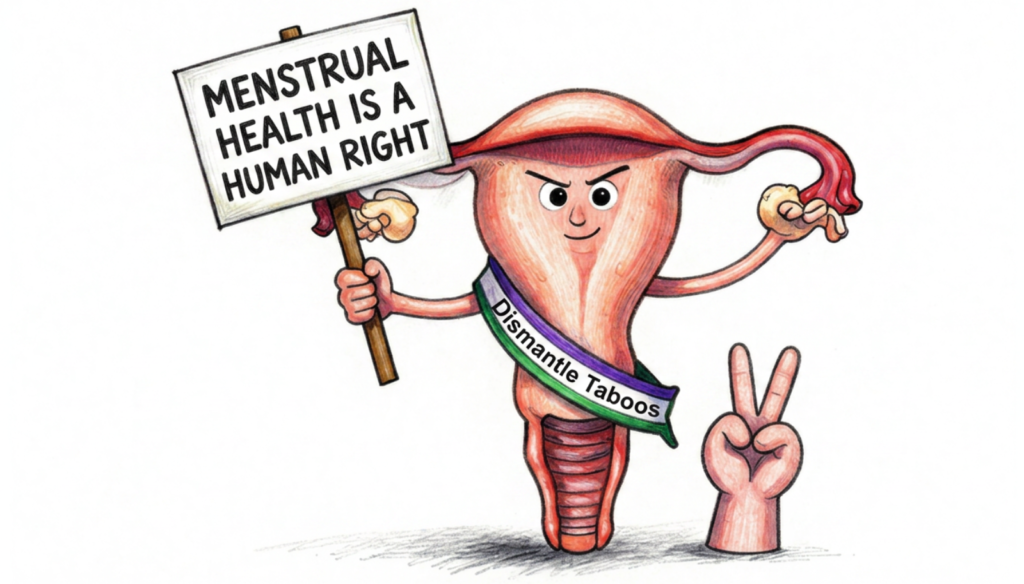
Achieving absolute menstrual equity requires shifting our perspective entirely. Menstruation must no longer be viewed through the lens of limitation or hidden whispers. It must be recognized as a profound marker of biological vitality, health and human continuation.
By professionalizing our advocacy, increasing access to high-quality sustainable menstrual products and delivering unfiltered body literacy to both males and females amongst other factors to be included, we can systematically transform periods into a normal, dignified fact of life.
How Will You Help Co-Create a Period-Friendly World?
Building a society free from reproductive limitations requires active, structured contribution from everyone. It doesn’t matter if you are an individual looking to master your own cycle wellness, a community advocate ready to launch a sustainable social venture or an institutional leader looking to secure high-quality eco-friendly products for an outreach project, Menstrualdemy provides the foundational tools you need.
To build a sustainable enterprise: Apply for the next cohort of our Menstrual Business School Program.
To purchase bulk reusable pad supplies or partner with us: Email our team directly (via menstrualdemy@gmail.com) to discuss your specific consultation or resource requirements today.